High Calorie Foods: Best Options for Healthy Weight Gain

Contents
Gaining weight in a healthy way is not about eating anything calorie-dense. It is about getting more energy from foods that also bring protein, healthy fats, fiber, vitamins and minerals, so the weight you gain supports your strength and health rather than just adding bulk.
For people who struggle with a small appetite, a fast metabolism, a busy schedule or recovery from illness, the challenge is usually eating enough, often enough. This guide covers how a calorie surplus works, the best high-calorie foods to build your meals around, simple ways to add calories without feeling stuffed, and what to limit. It is general information, not medical advice.
How much extra should you eat?
To gain weight, you need to eat more energy than your body uses. A Cleveland Clinic dietitian recommends gaining slowly by eating an extra 300 to 500 calories per day, spread across small meals every three to five hours plus snacks (Cleveland Clinic). Eating about every three hours is a common approach for people who feel full quickly (WebMD).
A modest surplus is easier to keep up and tends to favor steadier gain over a sudden jump. It also helps if you build up gradually over a few weeks instead of forcing very large portions from day one.
Best high-calorie foods for healthy weight gain
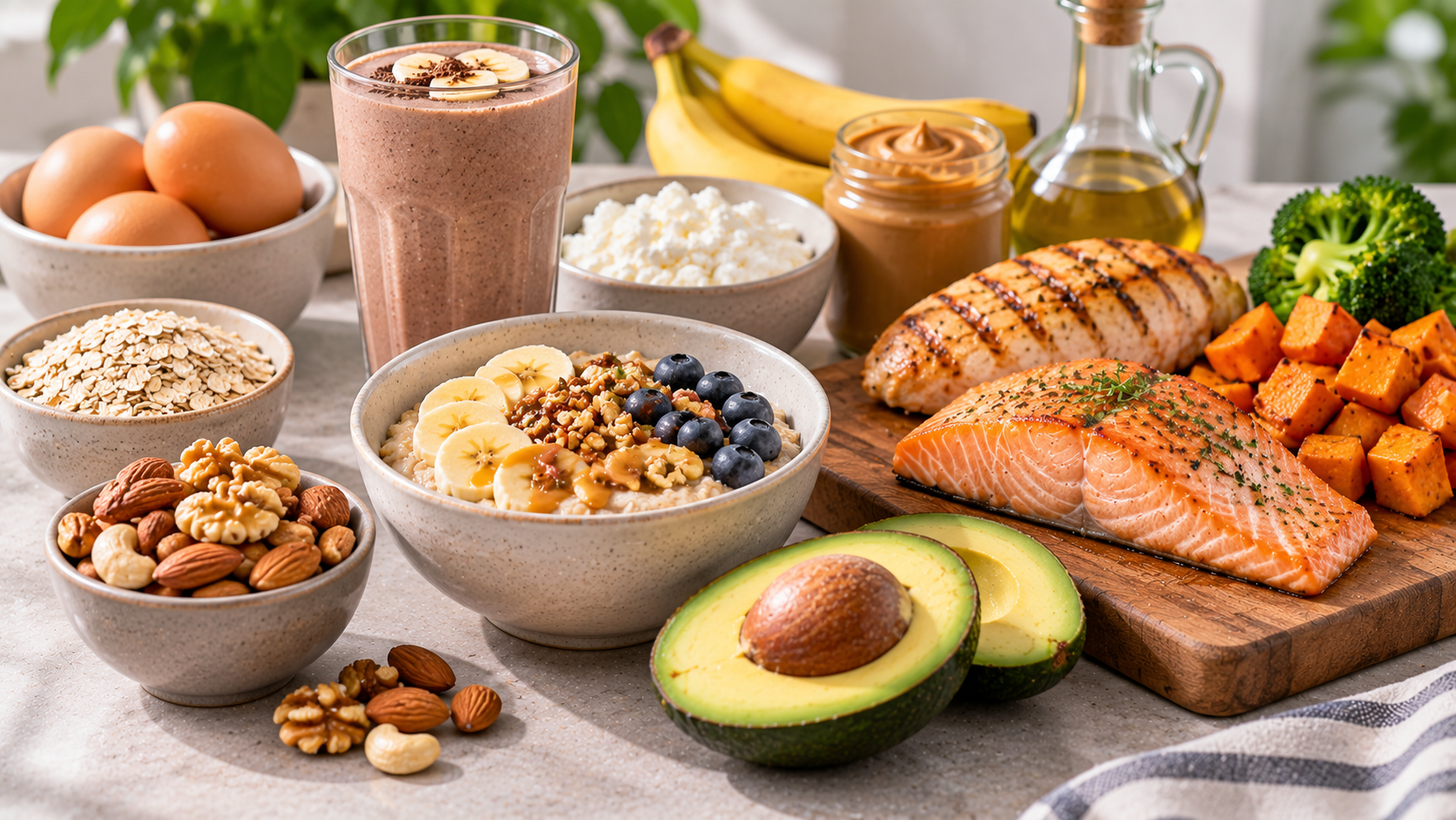
These foods pack calories into small portions while also providing protein, healthy fats or fiber. Figures are the approximate amounts given by the cited sources; brands and sizes vary.
| Food | Serving | Calories | Why it helps |
|---|---|---|---|
| Nuts, unsalted | 1 oz (about 1/4 cup) | 160 to 200 | Healthy unsaturated fat, protein and fiber (Cleveland Clinic) |
| Peanut or nut butter | 1 tablespoon | about 100 | Easy to add to toast, fruit or oats (WebMD) |
| Avocado | 1/2 on toast | about 250 | Healthy fats and fiber (Cleveland Clinic) |
| Olive oil | 1 tablespoon | 120 | Stirs into almost any meal (WebMD) |
| Hard cheese (cheddar) | 1.5 oz | 173 | Protein and calcium (Cleveland Clinic) |
| Greek yogurt with honey and nuts | 1/2 cup yogurt + 1 tbsp each | about 300 | About twice the protein of regular yogurt (Cleveland Clinic) |
| Egg | 1 whole egg | 78 | 6 g protein (Cleveland Clinic) |
| English muffin with nut butter | 1 muffin + 1 tbsp | about 250 | Quick, portable snack (Cleveland Clinic) |
| Banana chips | 1 oz | 147 | Calorie-dense fruit snack (WebMD) |
Other good choices include salmon, which adds calories along with omega-3 fats, starchy vegetables such as potatoes, corn and peas, and thick, creamy soups instead of clear broths (WebMD). Note that the WebMD article is an archived piece last medically reviewed in 2015.
Easy ways to add calories
If you cannot finish big plates, add calories without adding volume.
- Eat on a schedule. Aim for small meals every three to five hours with snacks in between, instead of waiting until you feel hungry.
- Upgrade what you already eat. Stir a tablespoon of olive oil into soup or pasta, add shredded cheese to eggs, or top oatmeal with nut butter and dried fruit.
- Choose full-fat versions. Swap "light" and "low-calorie" products for regular versions (WebMD).
- Drink calories carefully. A smoothie with milk or yogurt, banana, nut butter and oats adds energy in a form that is easy to get down. Keep portions around 8 ounces if larger ones fill you up (WebMD).
- Mind when you drink. Fluids right before a meal can fill you up, so sip between meals rather than 30 minutes before eating (Cleveland Clinic).
- Keep ready-to-eat snacks nearby. Nuts, trail mix, cheese, hummus with pita, and peanut butter on apple slices all work.
Foods and habits to limit
It is tempting to reach for chips, soda, donuts and candy because they are easy calories. Dietitians caution against relying on them: they add pounds but lack nutrients, and may add weight around the belly, which is linked to higher risk of diabetes and heart disease (Cleveland Clinic).
A few other points to watch:
- Saturated fat: Too much cheese can contribute to high cholesterol, and soft, creamy cheeses carry more saturated fat than hard cheeses (Cleveland Clinic).
- Added sugar and salt: Choose plain, unsalted nuts and check nut butters for added sugars and oils.
- Egg yolks: If you have heart disease or high cholesterol, ask your provider before eating many yolks. The Cleveland Clinic suggests limiting them to four per week in that case.
- Temporary approach: These tips are for a weight-gain period. Providers usually advise scaling back on high-fat foods afterward, so revisit your diet with a doctor or dietitian once you reach your goal.
Build muscle, and know when to see a doctor
Where the extra weight goes depends largely on how you live. Protein-rich foods and regular resistance training, such as lifting weights or bodyweight exercises, encourage the gain to go toward muscle rather than only fat. A dietitian quoted by the Cleveland Clinic recommends protein-rich foods that build muscle (Cleveland Clinic). Protein powder can boost protein and calories, but it does not offer the same nutritional value as whole foods.
See a healthcare provider if you are unintentionally losing weight, if your BMI is below 18.5 (the underweight range), or if you have a condition that can cause weight loss, such as cancer, type 1 diabetes or hyperthyroidism. Being underweight can contribute to infertility, a weakened immune system and sleep issues (Cleveland Clinic). A doctor or dietitian can check for underlying causes and tailor a plan.
The bottom line
Healthy weight gain comes from a steady, modest surplus built on nutrient-dense foods: nuts, nut butters, avocado, olive oil, eggs, dairy, fish and starchy vegetables. Eat often, add calories to the foods you already enjoy, and pair them with strength training. If you are underweight or losing weight without trying, get medical advice first.
FAQ
How fast should I gain weight? Slowly. An extra 300 to 500 calories a day is the range one Cleveland Clinic dietitian suggests.
Are nuts and nut butters really worth it? Yes. They are compact sources of calories, healthy unsaturated fat, protein and fiber. Watch portions and pick unsalted, low-sugar options.
Can I just eat fast food? It will add calories, but it brings little nutrition and may add weight around the belly. Use it occasionally rather than as your base.
Do I need supplements? Not usually. Protein powder can help in some cases, but whole foods give more nutrients.
Disclaimer: This article is for general information only and is not medical advice. Consult a doctor or registered dietitian before making major changes to your diet.
