Keto vs Low Carb Diet: Key Differences Explained

Contents
Low carbohydrate diets have become some of the most popular nutrition strategies for weight management and metabolic health. Among these approaches, keto and low carb diets are often mentioned together because both focus on reducing carbohydrate intake. However, despite the similarities, they are not the same and follow different nutritional principles.
Many people start reducing carbs without fully understanding how these two diets differ. While both approaches can support fat loss and improved blood sugar control, they involve different levels of restriction, macronutrient balance, and long-term flexibility.
In this article, we’ll break down the difference between keto and low carb diets, explain how each one works, and help you determine which approach might suit your lifestyle and goals.
What Is a Low Carb Diet?
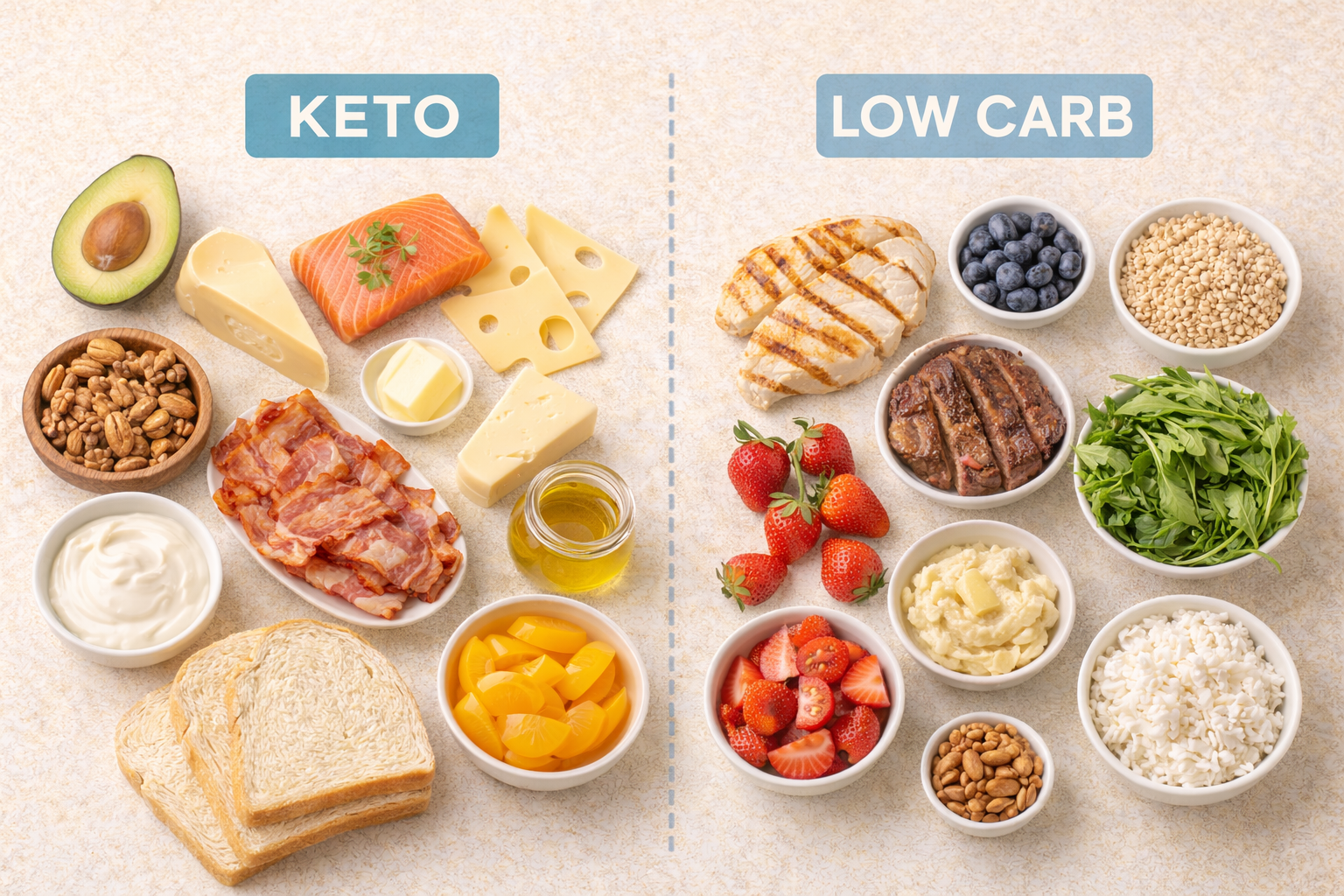
A low carb diet focuses on reducing carbohydrate intake compared to a typical Western diet, but it does not eliminate carbohydrates completely. Instead of strict rules, the approach usually emphasizes cutting refined sugars and processed carbs while prioritizing whole foods.
Most low carb diets allow between 50 and 150 grams of carbohydrates per day, depending on the specific plan and the individual’s goals. This range still allows room for foods like fruits, legumes, dairy, and whole grains while avoiding highly processed carbohydrates such as sugary drinks, pastries, and white bread.
The focus of a low carb diet is typically on increasing protein intake and healthy fats while reducing refined carbohydrates. Meals often include foods like eggs, poultry, fish, vegetables, nuts, seeds, and moderate portions of complex carbohydrates. If you're looking for ideas on what types of carbohydrates can still fit into a balanced plan, exploring healthy carbohydrate options can help you make smarter food choices.
One of the main advantages of this approach is flexibility. Because carbs are reduced rather than eliminated, many people find low carb diets easier to maintain long term compared to stricter eating styles.
What Is the Keto Diet?
The ketogenic diet, commonly called keto, is a much stricter version of carbohydrate restriction. It is designed specifically to shift the body into a metabolic state known as ketosis, where fat becomes the primary source of fuel instead of carbohydrates.
To reach ketosis, carbohydrate intake is typically limited to around 20–50 grams per day. This forces the body to convert fat into molecules called ketones, which can then be used for energy by the brain and muscles.
Because carbs are extremely limited, the keto diet requires a much higher intake of fat compared to a typical diet. A standard keto macronutrient breakdown often looks like this:
70–75% of calories from fat
20–25% from protein
5–10% from carbohydrates
Foods commonly eaten on keto include fatty fish, eggs, cheese, avocados, oils, nuts, seeds, and low-carb vegetables. Foods like bread, pasta, rice, and most fruits are usually restricted because they contain too many carbohydrates.
People who want a structured approach often follow a ketogenic meal plan, which helps balance fats, proteins, and carbs properly to maintain ketosis.
Key Differences Between Keto and Low Carb Diets
Although keto and low carb diets both reduce carbohydrate intake, the way they approach nutrition is quite different.
Carb Intake
The most obvious difference is the amount of carbohydrates allowed. Low carb diets typically allow anywhere between 50 and 150 grams of carbs per day, while keto diets usually restrict carbs to around 20–50 grams per day.
This stricter carb limit is what enables ketosis on the keto diet.
Fat Consumption
Low carb diets increase fat moderately, but the ketogenic diet relies heavily on fat as the main energy source. On keto, most calories come from fats such as olive oil, butter, nuts, seeds, and fatty meats.
Protein Intake
Protein intake also differs slightly. Low carb diets often include moderate to high amounts of protein. Keto diets, however, keep protein intake moderate because excessive protein can sometimes interfere with ketosis.
Ketosis Requirement
A key distinction is that ketosis is not required on a low carb diet. Many people following a low carb approach never enter ketosis and still experience benefits such as weight loss and improved blood sugar control.
On the other hand, ketosis is the central goal of the ketogenic diet.
Flexibility and Sustainability
Low carb diets are generally considered more flexible and easier to maintain long term. Since they allow more carbohydrates, people can still enjoy foods like fruits, legumes, and whole grains in moderation.
Keto diets tend to be stricter and require careful planning to stay within carb limits.
Benefits of Each Diet
Both low carb and ketogenic diets can offer health benefits when followed properly. However, the advantages may differ depending on the individual's goals and lifestyle.
Benefits of a Low Carb Diet
A low carb diet is often easier for people to sustain over time because it allows more food variety. By reducing refined sugars and processed carbs, many people experience steady weight loss and improved energy levels.
Low carb diets can also support better blood sugar control, making them a popular choice for individuals trying to manage insulin sensitivity or prevent metabolic issues.
Another advantage is that low carb diets can still incorporate a wide range of foods, making meal planning simpler and more adaptable to different cuisines.
Benefits of the Keto Diet
The ketogenic diet may promote faster fat burning for some individuals because the body relies heavily on stored fat for energy. This metabolic shift can help reduce appetite and make calorie control easier.
Some research also suggests that keto may help improve blood sugar levels and insulin sensitivity in certain individuals.
However, because keto is stricter and requires careful macronutrient tracking, many people need to learn how to calculate macros to maintain the correct balance of fats, proteins, and carbohydrates.
Which Diet Is Right for You?
Choosing between keto and low carb depends largely on your goals, lifestyle, and personal preferences.
For people who want a more flexible eating style that still supports weight management and improved metabolic health, a low carb diet can be a practical option. It allows more dietary variety and tends to be easier to maintain over the long term.
On the other hand, individuals who want to experiment with ketosis or pursue faster fat loss may find the ketogenic diet appealing. Keto can work well for people who enjoy high-fat foods and are comfortable following a more structured nutrition plan.
Activity levels can also influence the decision. Athletes or highly active individuals sometimes prefer moderate carb intake to support intense workouts, while others adapt well to keto depending on their training style.
Ultimately, the best diet is one that supports your health goals while remaining sustainable for your daily routine. Consulting a nutrition professional can help determine the most appropriate approach for your needs.
Conclusion
Both keto and low carb diets reduce carbohydrate intake, but they differ significantly in how strict they are and how the body uses energy. A low carb diet focuses on reducing refined carbs while maintaining flexibility, whereas the ketogenic diet drastically limits carbohydrates to trigger ketosis.
Each approach can support weight management and metabolic health when done correctly. The most important factor is choosing a diet that fits your lifestyle and allows you to maintain healthy habits over time.
Regardless of which method you follow, focusing on whole foods, quality protein sources, healthy fats, and balanced nutrition will always provide the best foundation for long-term health.
