Protein Shake Guide: Benefits, Types and How to Make One

Contents
Walk into any gym in Dubai around 7 p.m. and you'll see the same scene: someone shaking a bottle of chalky liquid before they've even put their bag down. Protein shakes have become the default answer to "how do I get more protein," but most people drinking them couldn't explain why they work, which type actually fits their goal, or whether the timing rules they've heard are even true.
This guide breaks down what a protein shake actually does, the real differences between whey, casein, and plant-based powders, how much protein you genuinely need per day, and a simple formula for building a shake at home without following a rigid recipe.
What Is a Protein Shake, Exactly?
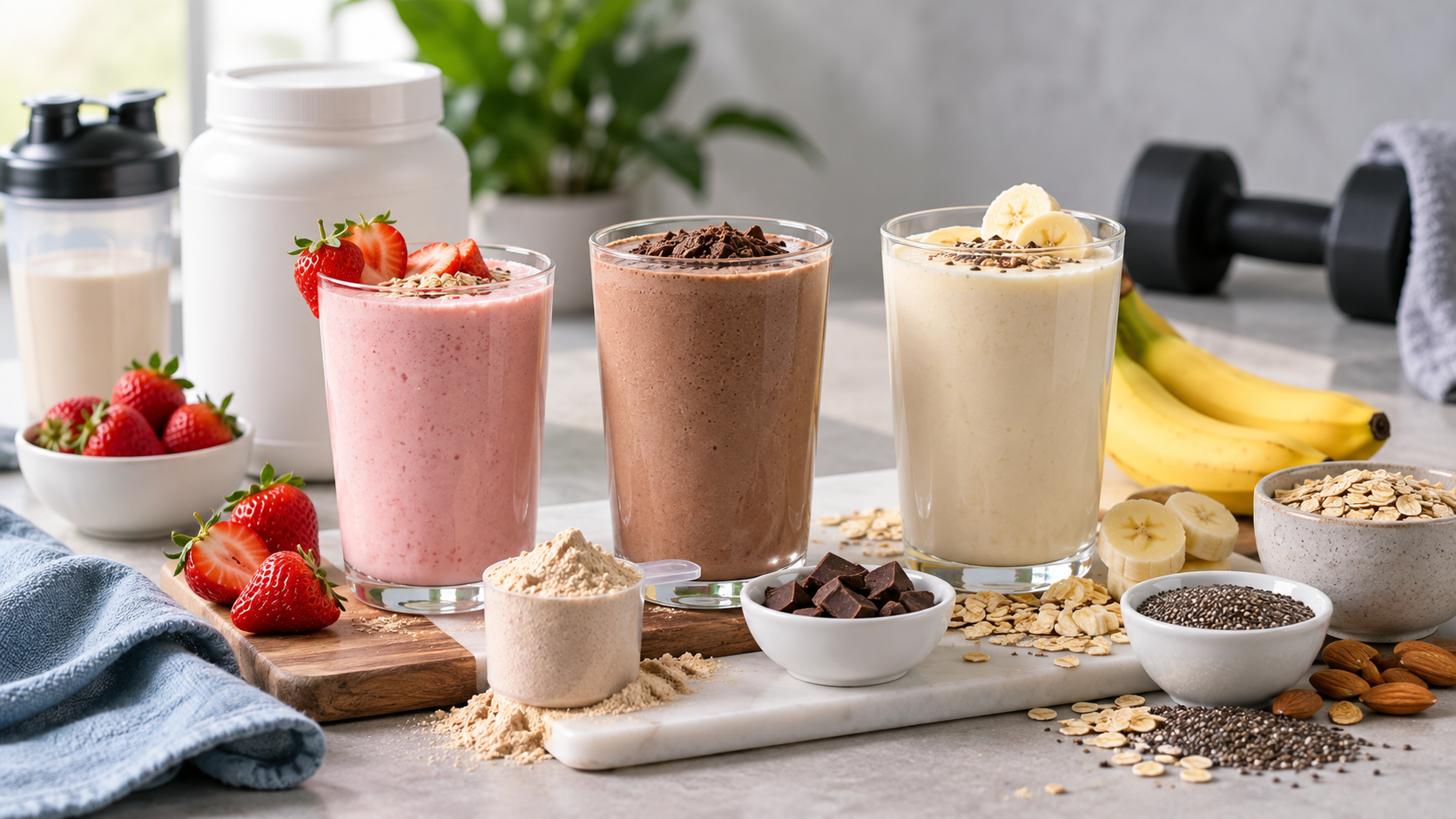
A protein shake is a drink built around a concentrated protein source, sually protein powder, mixed with a liquid such as water, milk, or a plant-based alternative. A standard serving delivers 20 to 30 grams of protein in a low-calorie, low-carb format, which is what separates it from a smoothie. A smoothie typically blends fruit, vegetables, and other whole-food ingredients into a thicker, more calorie-dense drink that may or may not contain much protein at all.
That distinction matters because the two drinks serve different jobs. A protein shake is built to deliver protein quickly and efficiently. A smoothie is built for broader nutrition, including fibre, vitamins, and natural sugars, and works better as a meal replacement than as a targeted protein top-up.
The Real Benefits of Protein Shakes
Muscle Repair and Growth
Resistance training creates small tears in muscle fibre, and protein supplies the amino acids your body uses to repair and rebuild that tissue. Research pooling data across dozens of studies has found that protein supplementation alongside resistance training measurably improves muscle size and strength in adults, which is why shakes remain a staple for anyone lifting weights consistently.
Weight Management and Satiety
Protein digests more slowly than carbohydrates, which is part of why high-protein diets tend to leave people feeling fuller for longer. A shake between meals can blunt cravings and reduce the temptation to snack on lower-quality food, though it only works as part of an otherwise balanced eating pattern rather than as a substitute for one. If weight loss is the main goal, pairing shakes with a structured, calorie-conscious eating plan, such as Lifter Life's Weight Loss Meal Plan, tends to produce more consistent results than relying on shakes alone.
A Practical Way to Close Protein Gaps
Most people underestimate how much protein they actually eat across a day, and hitting a higher protein target through whole food alone can mean several extra meals of chicken, fish, or legumes. A shake closes that gap in under a minute, which is why it's popular with anyone juggling a demanding schedule rather than just competitive athletes.
Support for Healthy Aging
Muscle mass naturally declines with age, a process known as sarcopenia. Research shows older adults benefit from higher protein intakes than younger adults, generally in the range of 1.0 to 1.2 grams per kilogram of body weight, especially when combined with resistance exercise. A daily shake is an easy way to hit that target without eating noticeably more food, which matters most for anyone who'd rather not overhaul their whole diet just to raise their protein number.
How Much Protein Do You Actually Need?
The baseline Recommended Dietary Allowance (RDA) is 0.8 grams of protein per kilogram of body weight per day, but that figure represents the minimum needed to avoid deficiency, not the amount required to support training or muscle maintenance. Dietitians at UCLA Health note that most adults do better in the 0.8 to 1.6 grams per kilogram range depending on activity level and age, and people who train regularly with weights often need the upper end of that scale or slightly more.
These are general guidelines rather than prescriptions, and anyone managing a medical condition should check their target with a doctor or dietitian rather than relying on generic ranges. If you're following a structured plan such as Lifter Life's Muscle Growth Meal Plan, the protein target is already built into the daily meal breakdown, so a shake becomes a top-up rather than your main source.
Types of Protein Shakes: Which One Fits Your Goal?
Whey Protein
Whey comes from milk and is the most common protein powder because it contains all nine essential amino acids and absorbs quickly. It comes in three main forms: concentrate (more natural nutrients but slightly higher in lactose and fat), isolate (more purified with a higher protein percentage), and hydrolysate (pre-broken-down for faster absorption). Isolate is generally the better choice for anyone sensitive to lactose.
Casein Protein
Casein is also dairy-derived but digests far more slowly than whey, releasing amino acids steadily over several hours. That slow release makes it a common choice before bed or during long gaps between meals, rather than immediately after a workout when faster absorption is more useful.
Plant-Based Protein
Pea, soy, rice, and hemp proteins are the standard dairy-free options, and blends of two or more sources, commonly pea and rice, are used to create a more complete amino acid profile similar to whey. Plant-based powders tend to carry more fibre and less fat than whey, which suits anyone building muscle on a vegan or lactose-free diet.
Whole-Food (No-Powder) Shakes
Protein powder isn't the only route to a protein shake. Greek yoghurt, cottage cheese, milk, tofu, and egg whites all blend into a shake without any powder at all, which is useful if you'd rather avoid supplements entirely. A ready-made shake from a café or restaurant works just as well on days when blending isn't practical, as long as you check what's actually in it.
Best Time to Drink a Protein Shake
The "anabolic window," the idea that you must drink a shake within 30 minutes of finishing a workout or lose the benefit, is one of the most repeated myths in fitness. A widely cited meta-analysis comparing pre-workout and post-workout protein timing found no meaningful difference in muscle gained between the two, concluding that total daily protein intake, not the timing of any single shake, is what actually predicts muscle growth. In practice, that means the best time to drink a protein shake is whichever time you'll realistically stick to: before training, after training, as a mid-morning snack, or even at night if you're using a slow-digesting option like casein.
How to Make a Protein Shake at Home
The Basic Formula
Every good protein shake follows the same structure, regardless of the exact recipe:
Base liquid (¾ to 1 cup): water, dairy milk, or a plant-based milk
Protein source (20-30 g): a scoop of powder, Greek yoghurt, or cottage cheese
Flavour and texture: frozen fruit, oats, or a spoon of nut butter
Optional boost: chia or flax seeds, spinach, or a dash of cinnamon
Blend on high for 30-45 seconds, adding ice or extra liquid until you reach the consistency you want.
Balanced Everyday Shake
1 cup unsweetened almond milk
1 scoop vanilla whey or pea protein
1 medium banana
1 tbsp peanut butter
Ice, blended until smooth
A single medium banana adds roughly 100-120 calories along with natural sweetness and potassium, so it's worth checking a full banana calorie breakdown if you're tracking intake closely.
Weight-Loss Shake
1 cup unsweetened soy or almond milk
1 scoop protein powder (whey isolate or pea)
Handful of spinach
½ cup frozen berries
No added sweetener
Keeping added sugar out and leaning on berries for sweetness keeps this version under roughly 250 calories while still hitting a full protein serving.
Muscle-Gain Shake
1 cup whole milk or oat milk
1.5 scoops whey protein
1 banana
2 tbsp rolled oats
1 tbsp nut butter
This version adds carbohydrates from oats and banana on top of the protein, which supports recovery and makes it easier to hit a calorie surplus on training days.
Protein Shake Mistakes to Avoid
Relying on shakes instead of meals. A shake is a supplement to your diet, not a replacement for whole food on a regular basis.
Ignoring what's mixed in. Sweetened juices, flavoured nut butters, and excess honey can quietly turn a "healthy" shake into a high-sugar drink.
Overdoing the serving size. More protein in one sitting doesn't mean faster results; spreading intake across the day supports muscle repair better than one oversized shake.
Not checking the powder's ingredient list. Independent testing has found that a number of popular protein powders carry detectable levels of heavy metals, so choosing tested, reputable brands matters more than chasing the cheapest option.
Skipping water. Protein needs adequate hydration to be processed properly, so a shake shouldn't be your only fluid intake around a workout.
The Bottom Line
A protein shake is a tool, not a shortcut. It works when it fills a genuine gap in your daily protein intake and fits into an otherwise balanced diet. Whether that means whey after a lift, a plant-based blend with breakfast, or a whole-food version with Greek yoghurt, the type matters less than consistency. Pick a version you'll actually make again, and the protein takes care of itself.
