What to Eat When Prescribed Semaglutide (Ozempic or Wegovy)

Contents
With more people turning to medications like Ozempic and Wegovy for weight loss and blood sugar management, understanding how to eat while on these drugs has never been more important. While semaglutide can help curb appetite and support weight reduction, the foods you eat can significantly impact your results—and how you feel along the way.
The right approach to eating can help reduce side effects like nausea or fatigue and keep your energy and metabolism steady. That’s where a tailored semaglutide diet plan comes in. Whether you're new to the medication or want to optimize your routine, this guide breaks down what to eat, what to avoid, and how to stay consistent on your journey.
What Is Semaglutide?
Semaglutide is the active ingredient in Ozempic and Wegovy—two FDA-approved medications prescribed for managing type 2 diabetes and aiding weight loss. It works by mimicking a natural hormone (GLP-1) that helps regulate blood sugar, slow down digestion, and reduce appetite.
Because semaglutide affects the way food moves through your system, your diet plays a big role in minimizing side effects and improving outcomes. Eating the right foods can make the medication more effective and help you feel better day to day.
Why Diet Is Important While Taking Semaglutide
As semaglutide slows digestion and suppresses appetite, some users experience side effects—especially during the first few weeks. These can include:
Nausea
Bloating
Constipation
Fatigue
Heartburn or reflux
Fortunately, many of these symptoms can be reduced or even prevented with smart food choices. The right Ozempic diet plan can also improve weight loss outcomes by helping you feel full longer and maintaining stable energy levels.
Semaglutide Diet Plan: What to Eat for Best Results
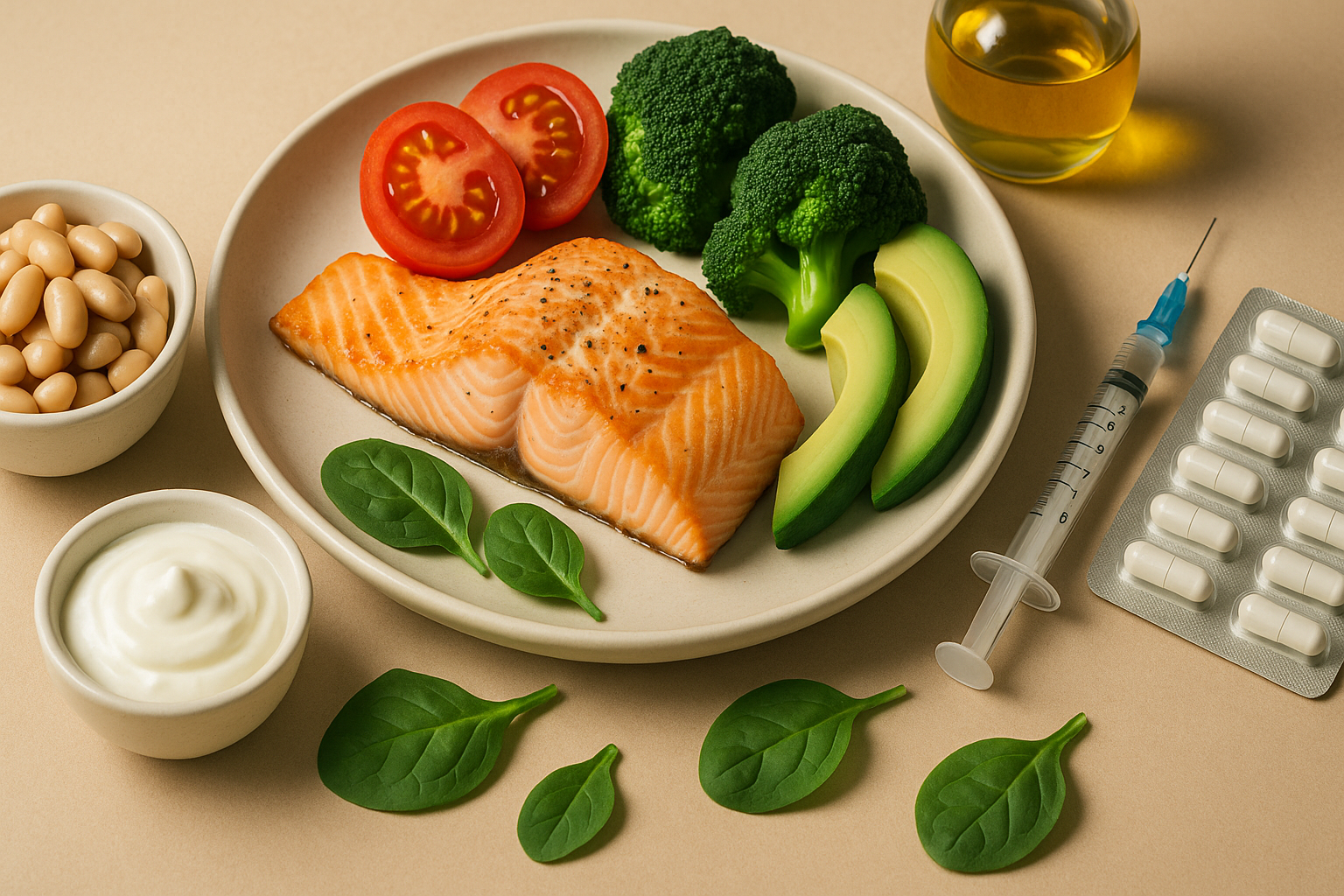
Here’s what a balanced, semaglutide-friendly diet looks like. It focuses on gentle digestion, stable energy, and satisfying nutrients.
1. Lean Proteins
Protein is essential while on semaglutide. It helps you feel full, preserves muscle during weight loss, and supports metabolism.
Recommended options:
Grilled chicken or turkey
Eggs
Greek yogurt
Tofu or tempeh
Fish (like salmon or cod)
Aim to include some protein in every meal and snack.
2. High-Fiber Foods
Fiber helps support digestion and keeps things moving—especially important since semaglutide can slow gut function.
Top fiber sources:
Leafy greens (spinach, kale)
Whole grains (quinoa, oats, brown rice)
Beans and lentils
Chia seeds or flaxseeds
Berries (blueberries, raspberries)
Introduce fiber gradually to avoid additional bloating or gas.
3. Healthy Fats in Small Amounts
Healthy fats can help you feel satisfied, but too much fat—especially greasy or fried food—can worsen nausea.
Best choices:
Avocado (small portions)
Nuts and seeds
Olive oil
Fatty fish (in moderation)
Stick to small servings and combine fats with protein and fiber for balanced meals.
4. Water-Rich and Hydrating Foods
Staying hydrated is essential on semaglutide. Dehydration can increase dizziness or fatigue, so load up on fluids and water-rich foods.
Great options include:
Cucumbers
Watermelon
Celery
Clear broth-based soups
Herbal teas
Plenty of plain water
Avoid sugary or carbonated drinks, which can cause discomfort.
5. Small, Frequent Meals
Large meals can overwhelm the digestive system, especially when it's already slowed by medication.
Try:
Eating 4–6 small meals or snacks per day
Keeping portions light but nutrient-dense
Avoiding long gaps between meals
This approach helps prevent nausea and supports steady energy levels.
Foods to Avoid or Limit on a Semaglutide Diet Plan
Some foods can trigger or worsen side effects while reducing the effectiveness of the medication. These include:
Greasy or fried foods (may increase nausea and reflux)
Sugary snacks (cause blood sugar spikes and crashes)
Highly processed foods (low in nutrients and hard to digest)
Carbonated drinks (can cause bloating or gas)
Alcohol (irritates the stomach and may impair glucose control)
Also avoid large portions and overly rich meals, which can overwhelm your slowed digestive system.
Sample Ozempic Diet Plan: A Day of Eating
Here’s a sample daily menu designed to be simple, satisfying, and gentle on digestion.
Breakfast
Scrambled eggs with spinach
A slice of whole grain toast
Herbal tea or water
Mid-Morning Snack
Greek yogurt with a few berries
Lunch
Grilled chicken breast
Quinoa and steamed broccoli
Olive oil and lemon dressing
Afternoon Snack
Apple slices with a small handful of almonds
Dinner
Baked salmon
Roasted sweet potatoes
Side salad with olive oil vinaigrette
Hydration: Water throughout the day, aiming for at least 6–8 cups.
This sample follows all the basics of a good semaglutide diet plan—balanced, portion-controlled, and supportive of digestion.
Tips for Staying Consistent on Your Ozempic or Wegovy Journey
Consistency matters. Here are some helpful habits to support your nutrition and results:
Meal prep once or twice a week to avoid impulsive eating
Keep a food and symptom journal to track what helps (and what doesn’t)
Practice mindful eating—eat slowly, stop when full
Stay hydrated every day
Make gradual changes instead of extreme restrictions
Over time, these habits become part of your routine and help you get the most out of your medication and diet combined.
Conclusion
What you eat while taking Ozempic or Wegovy makes a real difference—not just in weight loss, but in how you feel physically and emotionally. A well-planned semaglutide diet plan can help reduce common side effects like nausea and bloating, support consistent energy, and improve long-term success.
Choose foods that are nourishing, easy to digest, and aligned with your goals. By combining your medication with smart nutrition, you're setting yourself up for better results and a more sustainable journey.
And as always, speak with your healthcare provider or a registered dietitian to make sure your plan is right for your specific needs.
