Low Carb Pasta Alternatives for Keto Diets

Contents
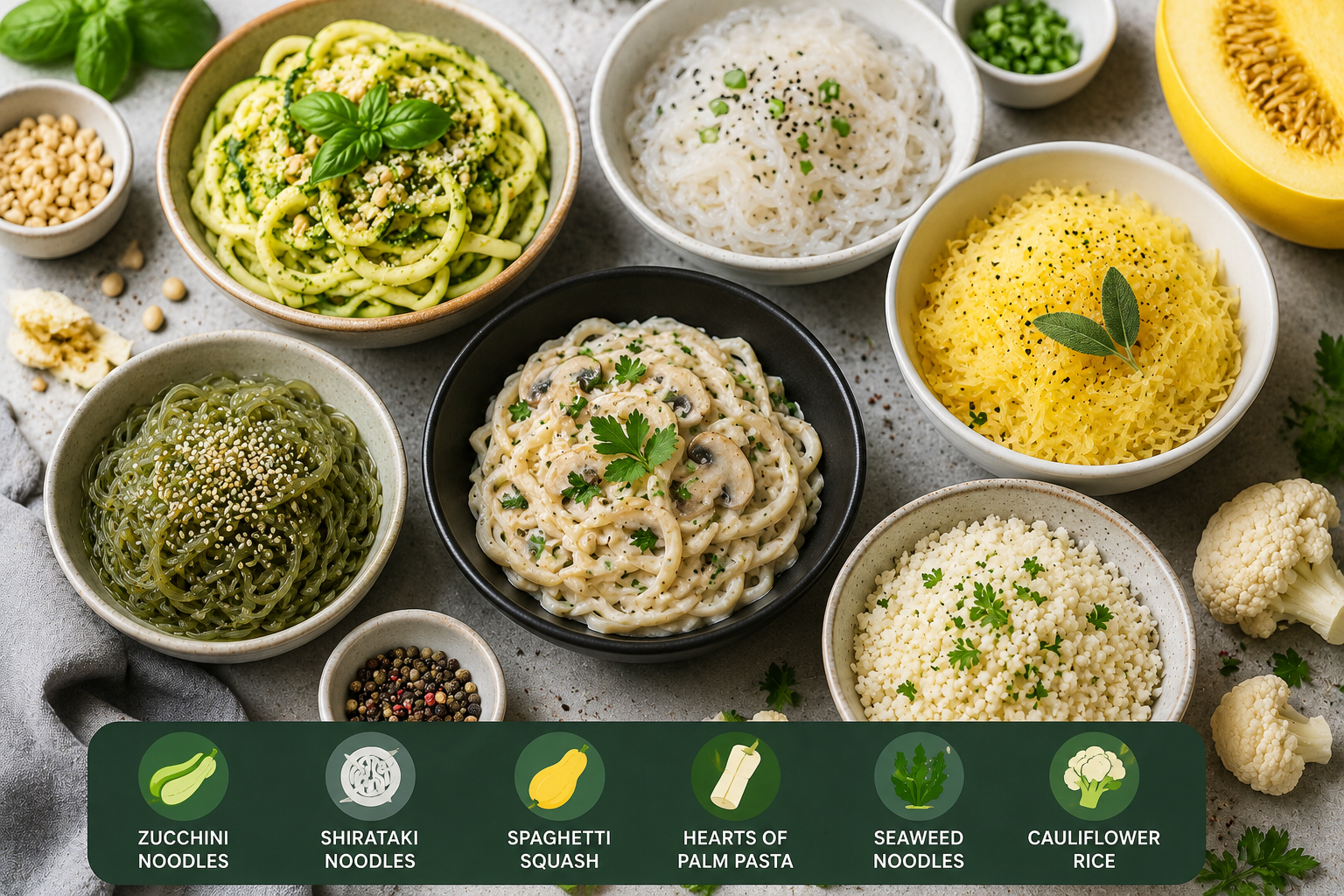
The best low carb pasta alternatives for keto and low carb lifestyles are shirataki noodles at 0 to 1g net carbs, zucchini noodles at 2 to 4g net carbs, spaghetti squash at 5.5g net carbs, hearts of palm noodles at 2g net carbs, cabbage noodles at 3g net carbs and eggplant sheets at 3g net carbs. Each offers a different texture and works best in specific dishes. The key is matching the right substitute to the right recipe.
Pasta is one of the hardest foods to give up on a low carb or ketogenic diet. A single cup of cooked regular wheat pasta contains around 40 to 50 grams of net carbs, which is at or above the entire daily carb allowance for most people following a strict keto diet. The good news is that a wide range of low carb pasta alternatives genuinely work, and some of them work very well. This guide ranks every option by net carbs per serving, explains exactly what each one is, how to prepare it correctly and which dishes it suits best.
Why Regular Pasta Does Not Work on Keto
Before looking at the alternatives, it helps to understand the numbers. A standard 80g dry serving of regular wheat pasta delivers around 55 to 60 grams of total carbohydrates and 50 to 55 grams of net carbs after subtracting fiber. On a ketogenic diet, the daily net carb target is typically 20 to 50 grams total. That means a single pasta serving can consume your entire daily carb budget before you have added any sauce, protein or vegetables.
Wholemeal and brown pasta are often assumed to be keto friendly but they are not. The difference is the type of carbohydrate, not the quantity. Brown pasta still delivers 40 to 45 grams of net carbs per serving, which remains far too high for ketosis.
Bean-based pastas made from chickpeas or lentils are another common trap. Despite being marketed as healthy and high in protein, chickpea pasta typically contains 28 to 35 grams of net carbs per serving. This is still too high for strict keto, though it may work for less restrictive low carb diets.
All Low Carb Pasta Alternatives Ranked by Net Carbs
The 8 Best Low Carb Pasta Alternatives for Keto
1. Shirataki Noodles (Konjac Noodles)
Net carbs: 0 to 1g per 100g serving
Shirataki noodles are the most keto-friendly pasta substitute available. Made from glucomannan fiber derived from the konjac root, these translucent noodles are composed of approximately 97 percent water and 3 percent soluble fiber. They contain virtually zero digestible carbohydrates, zero fat, zero protein and only 5 to 10 calories per serving.
The glucomannan fiber in shirataki noodles also has its own health benefit. Research shows it supports healthy gut bacteria, promotes satiety and may help reduce cholesterol and blood sugar levels.
Preparation tip: Shirataki noodles come packaged in liquid and have a naturally fishy odour when first opened. Rinse them thoroughly under cold water for at least one minute, then dry-fry them in a hot pan with no oil for two to three minutes. This step is essential as it removes excess moisture and significantly improves the texture. Without it, they can be rubbery and slippery. Use bold sauces as shirataki noodles have a very neutral flavour and absorb seasonings well.
Best used in: Stir fries, Asian soups, pad Thai, ramen-style dishes, spaghetti bolognese.
What to avoid: Some products labelled shirataki or miracle noodles blend konjac with tapioca or potato starch to improve texture. These contain significantly more digestible carbs. Always check the ingredients list and look for products containing only konjac flour and water.
2. Zucchini Noodles (Zoodles)
Net carbs: 2 to 4g per cup
Zucchini noodles are the most popular and accessible low carb pasta alternative. Made by spiralising fresh zucchini into long strands, zoodles provide a genuinely pasta-like appearance with a light, fresh texture. A cup of zoodles contains only 17 to 20 calories and 2 to 4 grams of net carbs, plus vitamin C, vitamin B6 and potassium.
Preparation tip: The biggest challenge with zoodles is excess moisture. Zucchini is over 90 percent water and will release liquid when cooked, making your sauce watery. To prevent this, salt the spiralised zoodles, let them sit in a colander for 10 minutes, then squeeze or press out the excess water before cooking. Cook them briefly in a hot pan for one to two minutes maximum. Overcooking makes them mushy. Alternatively, serve them raw or very lightly warmed for the best texture with cold sauces like pesto.
Best used in: Bolognese, pesto pasta, carbonara-style dishes, cold noodle salads, pad Thai.
3. Spaghetti Squash
Net carbs: 5 to 6g per 100g
Spaghetti squash is unique among keto pasta substitutes because it naturally forms pasta-like strands without any spiralising or processing. When baked or microwaved, the flesh separates into long, slightly sweet strands that genuinely resemble spaghetti. It is a good source of fiber, vitamin C, vitamin B6 and manganese.
Preparation tip: Cut the squash in half lengthwise, scoop out the seeds and brush the flesh lightly with olive oil. Place cut-side down on a baking tray and roast at 200°C for 35 to 45 minutes depending on size. Once cooked and slightly cooled, scrape the flesh with a fork to create the noodle-like strands. Do not overcook or the strands become too soft and watery.
Best used in: Spaghetti bolognese, carbonara-style dishes, simple butter and herb dishes, baked pasta-style casseroles.
4. Hearts of Palm Noodles
Net carbs: 2g per 100g
Hearts of palm noodles are made from the inner core of certain palm trees and have become one of the most popular keto pasta substitutes for people who want something closer to the real pasta experience. They have a mild, slightly artichoke-like flavour, a firm al dente texture, and come pre-cooked straight from the package. At only 2 grams of net carbs per 100g serving, they sit alongside shirataki as one of the lowest carb options available.
Preparation tip: Rinse well before using to remove the slightly briny flavour from the packaging liquid. Hearts of palm noodles do not need boiling and can be used directly from the pack. Warm them briefly in the sauce you are using rather than cooking them separately, as this improves flavour absorption.
Best used in: Spaghetti dishes, linguine with clam sauce, light tomato-based sauces, cold pasta salads.
5. Cabbage Noodles
Net carbs: 3g per 100g
Thinly sliced cabbage is one of the most underrated and most affordable low carb pasta substitutes. When cut into thin strips and briefly sautéed, cabbage takes on a soft, slightly chewy texture that works well as a noodle substitute in stir fry dishes and Asian-inspired recipes. It is widely available, inexpensive and adds a mild flavour that blends easily with strong sauces.
Preparation tip: Slice the cabbage into thin strips no wider than half a centimetre. Sauté in a hot pan with a little olive oil or butter for three to four minutes until just softened but still with some bite. Do not overcook or it becomes too soft and loses its noodle-like texture.
Best used in: Stir fries, Asian noodle dishes, ramen-style soups, simple butter and garlic noodle dishes.
6. Eggplant Sheets (for Lasagne and Baked Dishes)
Net carbs: 3g per 100g
Eggplant sliced lengthwise into thin sheets is the best keto pasta substitute for lasagne and other layered baked dishes. The slices hold their shape well during baking and have a neutral enough flavour to work seamlessly in a bolognese or béchamel-layered dish. A 100g serving of eggplant contains around 3 grams of net carbs and only 25 calories.
Preparation tip: Slice the eggplant lengthwise into half-centimetre thick sheets. Salt generously, leave for 15 to 20 minutes to draw out moisture, then pat dry. Brush lightly with olive oil and grill or roast briefly before layering into your lasagne. Pre-cooking removes bitterness and prevents the finished dish from becoming watery.
Best used in: Keto lasagne, moussaka, baked pasta-style casseroles.
7. Edamame Noodles
Net carbs: 5 to 6g per 100g
Edamame noodles are made from young soybeans and offer something that most other keto pasta substitutes cannot: high protein content. A 100g serving delivers around 14 to 16 grams of protein alongside 5 to 6 grams of net carbs, making them the best choice for anyone who wants both a low carb pasta substitute and a meaningful protein source in the same dish. They have a firm texture and cook like traditional noodles — simply boil and drain.
Preparation tip: Cook in boiling water for three to four minutes. Do not overcook or they become mushy. Rinse with cold water to stop cooking and maintain their firm texture.
Best used in: High protein pasta dishes, stir fries, cold noodle salads, Asian-inspired dishes.
8. Egg-Based Pasta (Fathead Pasta)
Net carbs: 2 to 4g per serving
Egg-based pasta, sometimes called fathead pasta, is a homemade keto pasta made from almond flour, cream cheese and eggs. It is one of the most satisfying keto pasta substitutes because the texture and mouthfeel come closest to real pasta. A standard serving contains around 2 to 4 grams of net carbs depending on the recipe and around 180 to 220 calories.
Basic recipe: 85g almond flour, 85g cream cheese softened, 1 egg, pinch of salt. Mix together, knead until a dough forms, roll thin between two sheets of baking paper, slice into noodle strips and cook in boiling water for two to three minutes until just tender. Alternatively, bake the sheets as lasagne layers.
Best used in: Fettuccine alfredo, creamy pasta dishes, lasagne sheets, baked pasta dishes.
What NOT to Use as a Keto Pasta Substitute
Several pasta alternatives are widely marketed as healthy or low carb but are not suitable for strict keto diets:
Chickpea pasta: 28 to 35g net carbs per serving. Nutritious but not keto compatible.
Lentil pasta: 28 to 33g net carbs per serving. Same issue as chickpea pasta.
Brown or wholemeal pasta: 40 to 45g net carbs per serving. The fibre content is slightly higher but the net carbs remain far too high for ketosis.
Rice noodles: 38 to 44g net carbs per serving. Made from white rice flour, completely incompatible with keto.
Glass noodles: 35 to 40g net carbs per serving. Made from mung bean starch, not a low carb option.
Sauce Pairing Guide: Which Sauce Works with Which Substitute
One of the most important and most overlooked parts of cooking with keto pasta alternatives is sauce pairing. Because these substitutes have different textures and water contents, they behave differently with different sauces.
How to Choose the Right Low Carb Pasta Alternative
The right substitute depends on three things: how strict your carb limit is, what dish you are making and what texture you prefer.
For the strictest keto approach with under 20g net carbs daily, shirataki noodles and hearts of palm are the best choices at 0 to 2g net carbs per serving.
For a broader low carb approach with 50 to 100g net carbs daily, zucchini noodles, spaghetti squash, cabbage and edamame noodles all work well.
For the closest texture to real pasta, egg-based fathead pasta is the most satisfying homemade option. For the most convenient store-bought option, hearts of palm noodles and shirataki are both ready to eat from the pack with minimal preparation.
Pairing any of these substitutes with a structured ketogenic meal plan makes it significantly easier to hit your daily macro targets consistently without having to calculate every meal from scratch. If you are newer to low carb eating, Lifter Life's healthy meal plans are built around exactly this kind of smart food swapping to make low carb living practical and sustainable long term.
