New to Dubai? How to Eat Healthy Before Your Kitchen Is Set Up

Contents
Moving to Dubai usually means weeks, sometimes over a month, before your shipped furniture and kitchenware actually arrive. In the meantime you are living out of a hotel, a serviced apartment, or an empty flat with nothing but a kettle and a mini fridge. Eating healthy in that gap is harder than it sounds, and it is one of the most common problems new residents run into before they even unpack their first box.
Why This Gap Exists
Shipping containers from most countries take four to eight weeks to reach the UAE, and that is before customs clearance. Many new arrivals spend their first month in temporary housing with limited or no cooking equipment. Combine that with Dubai's heat, which discourages walking to shops, and the easiest option becomes ordering fast food every night. That pattern sets a habit that is hard to break even once the kitchen is finally ready.
1. Stock a No-Cook Pantry First
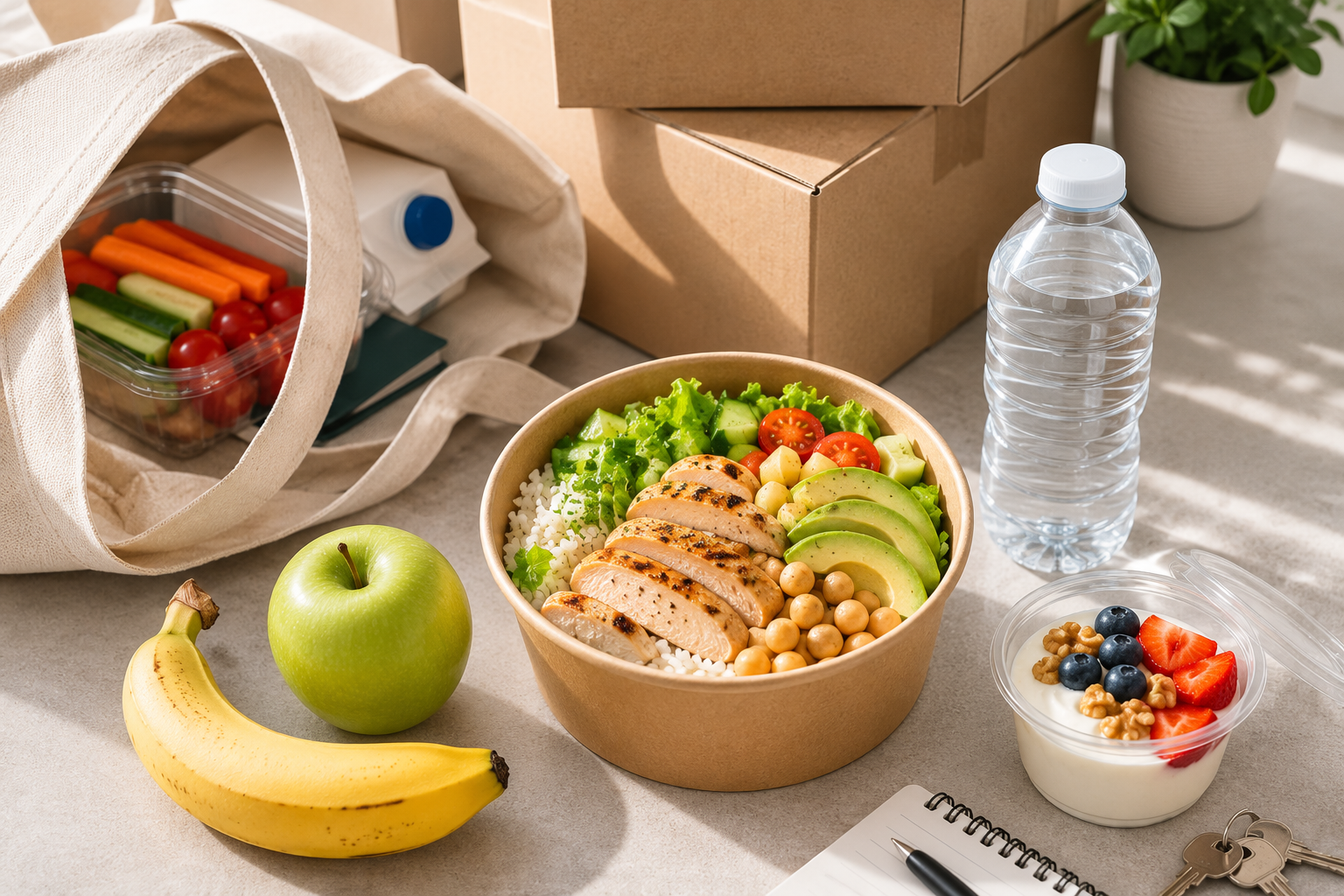
Before anything else arrives, a mini fridge and a few pantry basics go a long way. Greek yogurt, pre-washed salad bags, boiled eggs, canned tuna, hummus, and fruit all need zero preparation and are available in every Dubai supermarket, including the smaller convenience chains found in most residential buildings. Overnight oats are another easy option since they only need a fridge and a spoon, not a stove.
2. Use Grocery Delivery for Ready Meals, Not Just Ingredients
Grocery apps in Dubai stock a large selection of ready-to-eat meals designed for exactly this situation, from grab-and-go salads to protein bowls that only need a microwave, or nothing at all. This is different from ordering groceries to cook with. Look specifically for the ready meals or grab-and-go section rather than raw ingredients, since that is what actually solves the no-kitchen problem.
3. Lean on Healthy Meal Delivery Instead of Takeout
This is the single most effective fix for the entire situation. Standard takeout in Dubai leans heavily on fried food, white rice, and large portions, which adds up fast if it becomes a daily habit for a month or more. A structured meal plan in Dubai solves this differently: meals arrive pre-portioned, calorie-counted, and ready to eat cold or reheated, with no kitchen, oven, or grocery shopping required at all. For someone in the exact position of having no kitchen yet, this is close to the only way to eat consistently well without defaulting to fast food every night.
4. Choose Healthy Restaurants for the First Few Weeks
Dubai's restaurant scene has shifted significantly toward healthier options in recent years, with many venues now displaying calorie counts and healthy food badges as part of the city's official Food Watch program. If eating out is unavoidable during this period, look for restaurants with clearly listed nutrition information rather than guessing, and favor grilled over fried, and rice or salad sides over extra bread.
5. Watch Out for These Common New-Resident Traps
The two habits that cause the most damage in this period are convenience takeout every night and forgetting to drink enough water. Dubai's heat increases fluid needs substantially, and it is easy to under-drink water when you are busy handling visas, bank accounts, and apartment logistics. Keep a large water bottle wherever you are staying and refill it deliberately, since thirst is often mistaken for hunger in hot climates.
Once Your Kitchen Is Set Up
When your shipment finally arrives, the transition back to home cooking is easier if you have kept at least some healthy habits going in the meantime. Start with simple one-pan meals rather than jumping straight into complex recipes, and keep whatever grocery delivery or meal plan habits worked well during the gap, since there is no rule that says cooking has to replace them completely once you have the option.
Conclusion
The weeks between arriving in Dubai and actually having a working kitchen do not have to mean living on takeout. A no-cook pantry, ready meals from grocery delivery, and a structured meal delivery service cover almost everything a working kitchen would otherwise handle, and they set a healthier pattern that is easy to keep once your own kitchen is finally ready.
