12 Carb Alternatives for a Low-Carb, Balanced Diet

Contents
Nearly a third of U.S. adults planned to try a low-carbohydrate diet in 2026, according to a recent Physicians Committee survey. But cutting carbs doesn't mean giving up rice, pasta, or bread for good. It means knowing which carb alternatives actually work. Here are 12 of the best, plus what the newest research says about whether low-carb eating is actually healthier.
What Counts as a Carb Alternative?
A carb alternative is any food that replaces a starchy staple such as rice, pasta, bread, or potatoes, while offering a similar texture or function with fewer carbohydrates. The Mayo Clinic notes that a typical low-carb diet allows 60 to 130 grams of carbs a day, well below the 225 to 325 grams found in a standard 2,000-calorie diet. The CDC is clear that carbohydrates shouldn't be eliminated entirely, since the body and brain need them to function. A healthy diet manages carb quality and portion size rather than cutting carbs out altogether.
Rice Alternatives
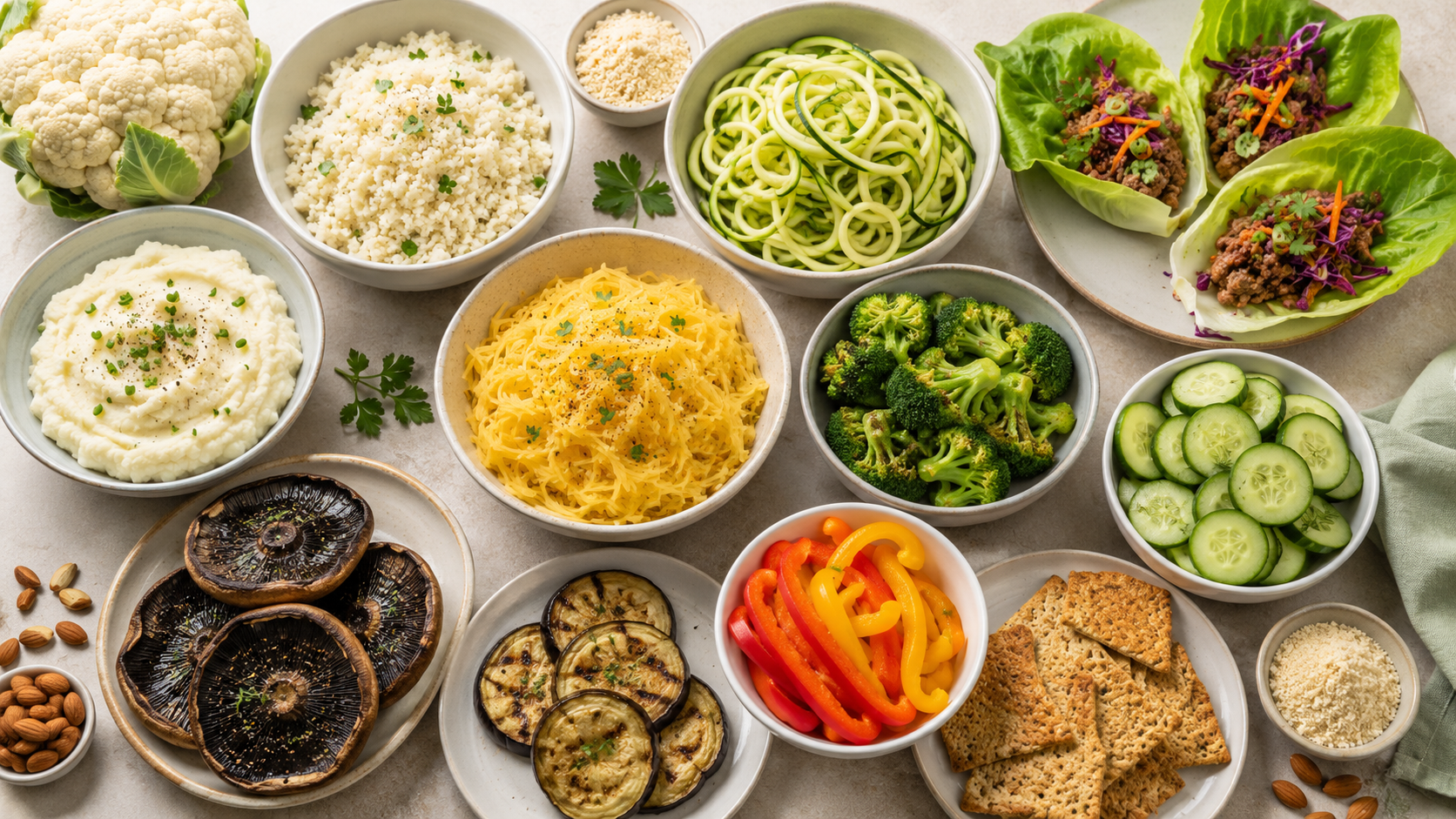
- Cauliflower rice - The most widely available substitute for rice, with a similar texture and a fraction of the carbs: roughly 5 grams per cup versus 45 grams for white rice. It's sold pre-riced, fresh and frozen, in most Dubai supermarkets.
- Broccoli rice - Works the same way as cauliflower rice and holds up well in stir-fries, where the rice needs to absorb sauce rather than stand on its own.
- Riced cabbage - A lower-cost alternative to cauliflower or broccoli rice, with a similar texture once cooked.
- Quinoa - A middle-ground option that keeps some complex carbs rather than cutting them out entirely. It adds complete protein and fiber, making it a better fit for a balanced diet than a strict low-carb one.
Pasta and Noodle Alternatives
- Zucchini noodles - Deliver a similar bite to spaghetti with far fewer net carbs, and they're one of the easiest low-carb pasta alternatives to build into a keto routine.
- Spaghetti squash - Cooks into long, pasta-like strands and works well with most sauces.
- Shirataki noodles - Made from the konjac yam, these are close to carb-free and work well in stir-fries or soups.
- Chickpea or lentil-based pasta - Costs more in carbs than zucchini noodles but adds protein and fiber, making it a better fit for a balanced diet rather than a strict low-carb one.
Bread and Baking Alternatives
- Lettuce wraps - The simplest substitute for sandwiches, tortillas, and burger buns — no prep, no carbs, and they hold fillings just as well.
- Egg-white wraps - A step up for anyone who wants something closer to a traditional wrap, with most brands running under 1 gram of carbs per wrap.
- Almond flour - A standard low-carb substitute for all-purpose flour, denser and higher in fat, best in recipes like pancakes or muffins.
- Coconut flour - Absorbs far more liquid than wheat flour, so recipes typically need less of it plus extra eggs or liquid. Both this and almond flour bake denser than wheat bread due to the lack of gluten.
Are Low-Carb Diets Actually Healthier?
A February 2026 Harvard T.H. Chan School of Public Health study, published in the Journal of the American College of Cardiology, followed nearly 200,000 people for over 30 years. It found that low-carbohydrate diets built on refined carbs and animal fat carried a higher risk of coronary heart disease, not a lower one. Low-carb diets built on high-quality, plant-based foods, by contrast, were linked to roughly 15% lower heart disease risk. The takeaway is that it's diet quality, not carb quantity, that drives the health outcome. These 12 swaps help most when they replace refined carbs, not when they replace the vegetables and protein you'd otherwise be eating.
Using These Swaps for Keto or Diabetic Diets
Carb replacement matters most for two groups: people following a ketogenic diet, who need to stay under roughly 20 to 50 grams of carbs a day to maintain ketosis, and people managing diabetes, who need steady, predictable carb intake to control blood sugar. For keto, swaps 1, 5, 7, and 10 above are close to essential rather than optional. For diabetes, the CDC recommends pairing any carb with a protein or fat source to slow digestion and blunt the blood sugar spike. Anyone following a structured keto meal plan Dubai or diabetic meal plan already gets these ratios built into every meal, without needing to track any of it manually.
Making These Swaps Work for a Balanced Diet
The biggest mistake in carb-alternative eating is treating every swap as an automatic win. Cauliflower rice, for instance, has very little to offer beyond fiber and vitamin C. It's useful for cutting carbs, but it's not a real replacement for the folate and B vitamins found in brown rice. The same logic extends to drinks: some alcoholic options carry far more carbs than others, so leaning toward the lowest calorie alcohol choices applies the same principle to what you drink, not just what you eat. The healthiest approach is to use these 12 alternatives selectively: swap out refined carbs like white pasta and white bread first, keep complex carbs like quinoa in rotation, and build the rest of the plate around vegetables and protein. People who'd rather have this balance handled for them can get it through a meal plan Dubai that's already built around these ratios.
The Bottom Line
These 12 carb alternatives work best as a tool, not a rule. Swap cauliflower rice for white rice, zucchini noodles for pasta, and lettuce wraps for bread when cutting refined carbs, but keep complex carbs like quinoa in the mix if your goal is a balanced diet. The research is clear that diet quality, not carb quantity, is what protects long-term health.
